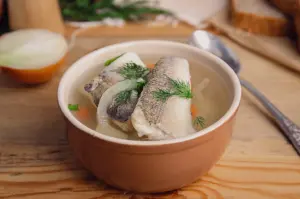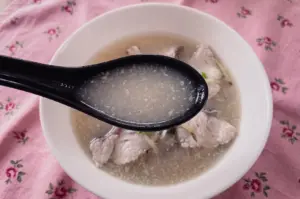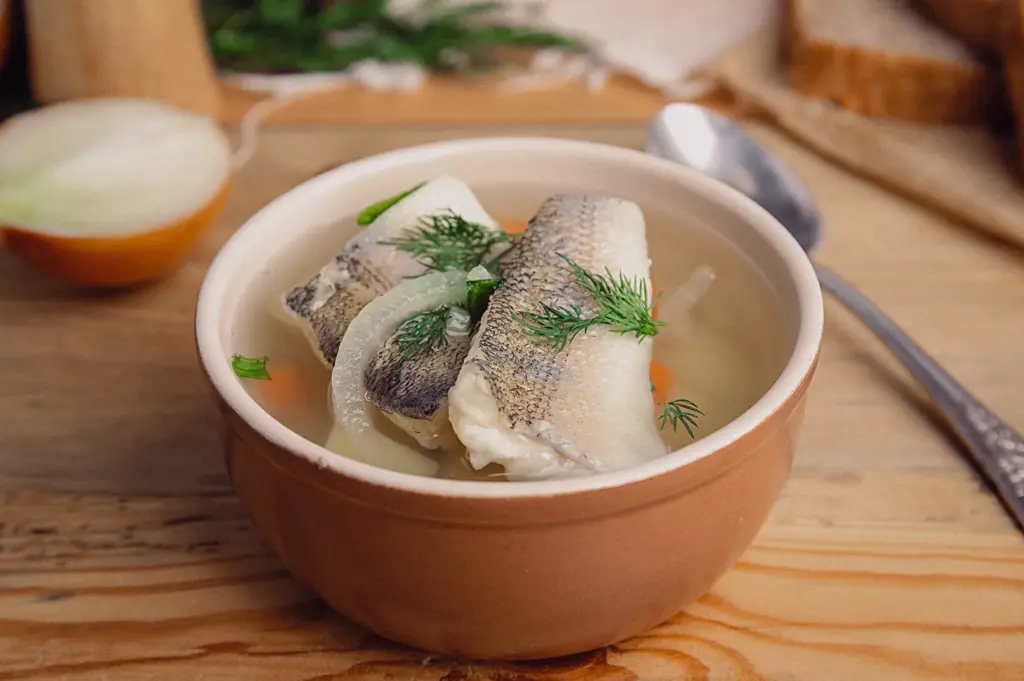
Some fish soups are clear enough to see the bottom of the bowl. Others are milky and coat the spoon. Both can be good. They are simply built differently.
This guide explains light vs. heavy fish soup broth in practical terms. It covers what makes each style, how each one tastes, and when cooks choose one over the other. In short:
- A light broth is about clarity and gentle flavour.
- A heavy broth is about body, which comes from collagen and fat held in the liquid.
- Neither is better. Each suits a different kind of bowl.
"Heavy" can sound like a fault. In broth, it only means body. In this guide, "rich" and "heavy" describe the same style.
Light vs. Heavy Fish Soup Broth: The Core Difference
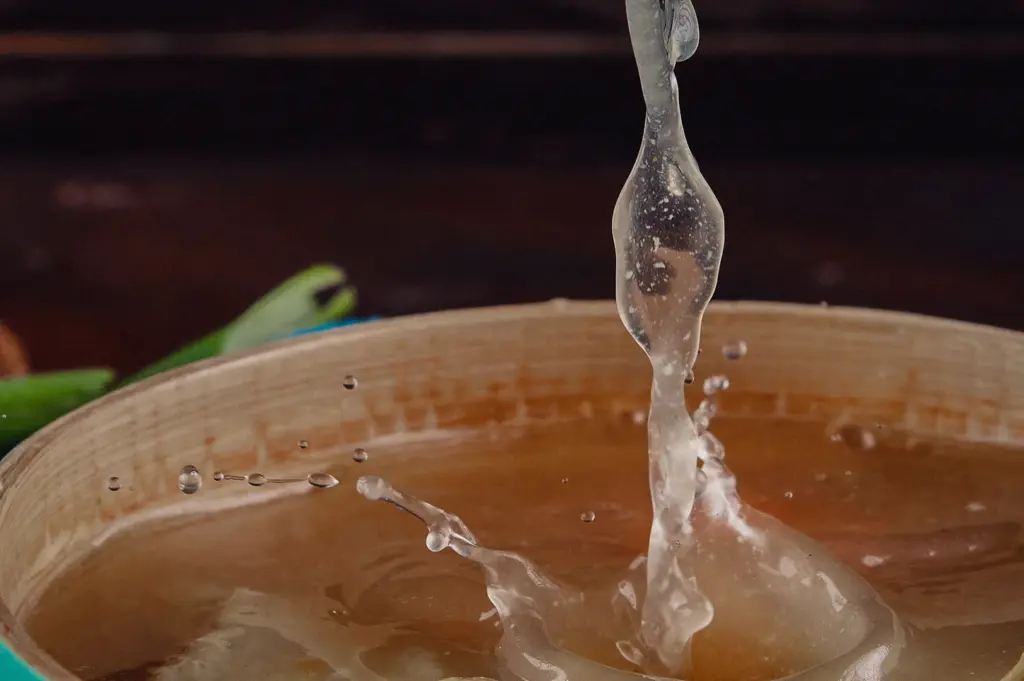
The difference comes down to what the liquid holds. A light broth carries flavour and very little else. A heavy broth also carries gelatin and tiny droplets of fat.
Both of these come from bones. As collagen-rich bones simmer, the collagen breaks down into gelatin. Movement in the pot breaks fat into fine droplets, and the gelatin holds them in place. The broth turns opaque and feels fuller on the tongue.
A light broth avoids this. Cooks use fewer bones, keep the heat low and skim often. The liquid stays clear. Body is the dividing line.
How the Two Styles Compare
| Light broth | Heavy broth | |
|---|---|---|
| Look | Clear or nearly clear | Milky and opaque |
| Texture | Thin, runs off the spoon | Coats the spoon |
| Flavour | Clean and delicate | Round and savoury |
| Built from | Fewer bones, gentle heat | Collagen-rich bones, a steady simmer |
| What leads | The fish slices | The broth and fish together |
How Each Style is Made
Light Broth
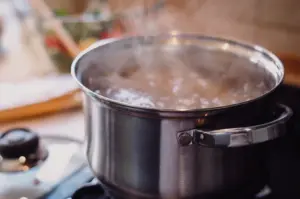
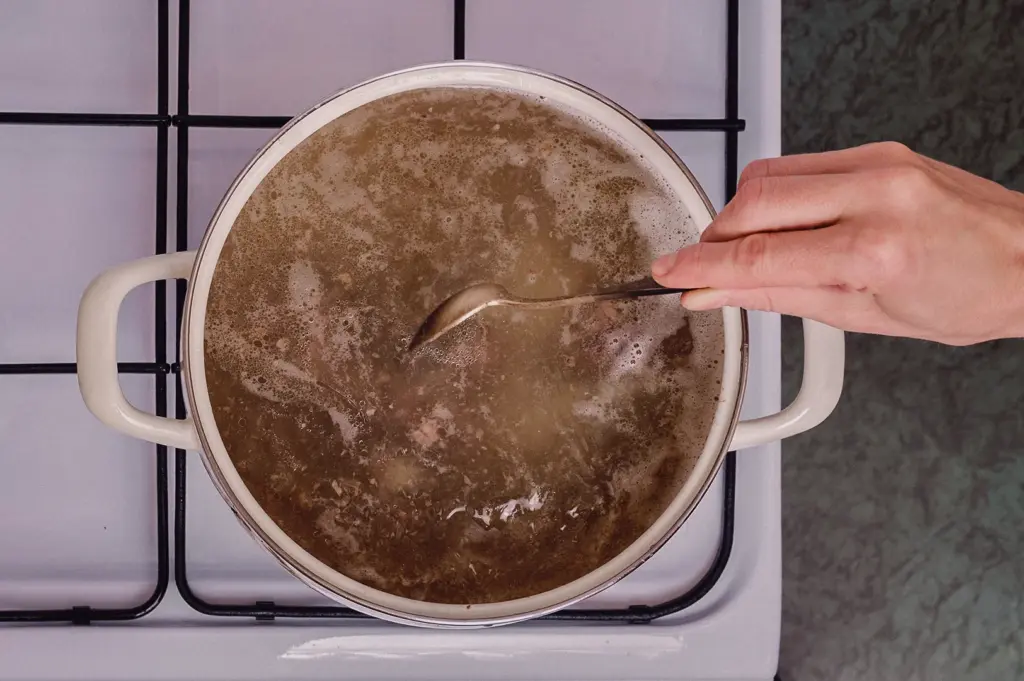
Low heat is the first rule. A hard boil churns protein and fat through the liquid and clouds it. Regular skimming lifts away anything that rises.
A light broth hides nothing. Any off-note in the fish comes straight through. Clean fish matters most here.
Heavy Broth
A heavy broth needs collagen-rich bones and a steady simmer. The heat has to move the liquid enough to spread fat evenly. That is what turns it white.
Some kitchens take a shortcut. Evaporated milk whitens a broth in minutes, and a shell or siput base thickens it. Both give colour without body from the bones. A rich broth should earn its weight from what goes into the pot.
Seasoning Both Styles
Broth reduces as it cooks, so any salt added early becomes stronger. This applies to light and heavy broths alike. You can read about why salt should be added last in fish soup for more on timing.
When Each Style is Used
A light broth suits a meal where the fish is the whole point. It lets delicate flesh show its sweetness. It also sits well alongside other dishes without filling you up.
A heavy broth suits a bowl that is the meal on its own. It stands up to rice or noodles. It also works with sharp, sour and salty condiments, which give the richness something to push against.
The choice is about balance, not strength. A good cook picks the broth that lets the fish come through.
Where Our broth Sits
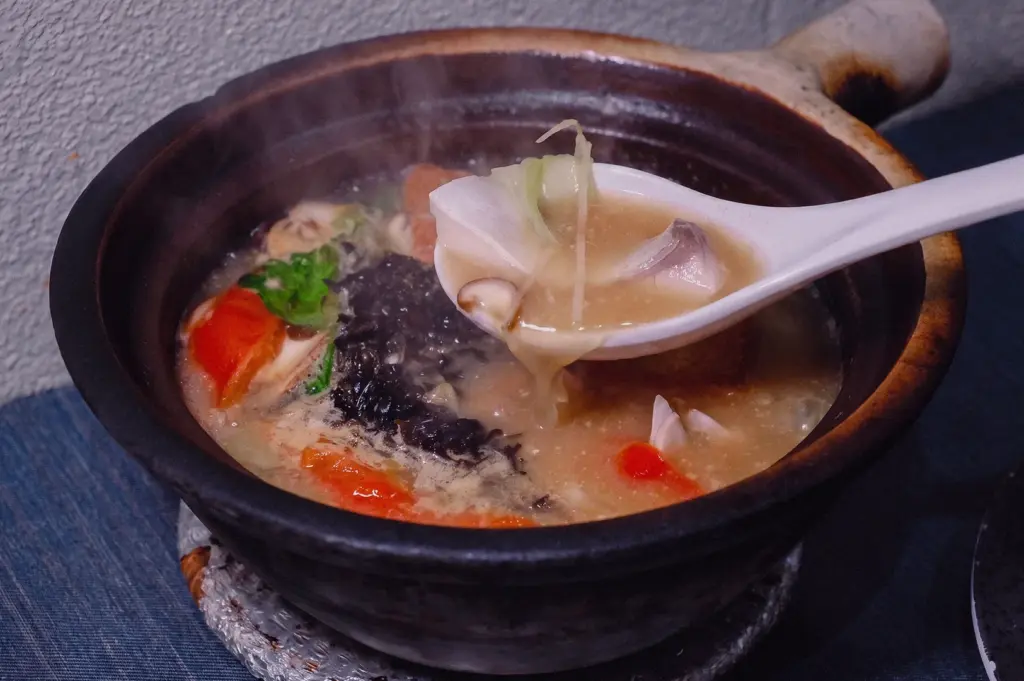
At Hup Lok, a Havelock Road fish soup restaurant, our broth is the rich style. It starts with batang bones, simmered with chicken and tee poh, the dried sole fillet. The collagen from the bones gives it a naturally milky ivory body. There is no evaporated milk and no shell or siput base. The soup is white because the bones give everything.
The broth takes roughly one hour. The founder's father made his soup without a fixed written recipe. Chef Kee Leng, who is also a partner, balanced and refined it into the version we serve today. He set the ratios, heat and timing so the kitchen makes the same bowl each service. A rich broth only works if it is the same every time.
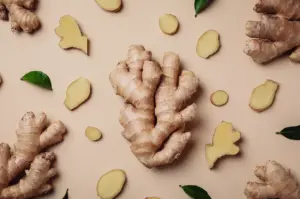
Grandpa's Pomfret Soup, named in honour of the founder's father, is finished with generous pomfret slices and three Teochew condiments. Sng buay (sour plum) adds sourness. Kiam chye (salted mustard) adds a salty edge. Julienned ginger adds sharpness. Together they keep a rich broth from sitting heavy. The pomfret stays at the centre of the bowl.
It Starts With the Fish
Light or heavy, a broth can only give what the fish holds. That depends on people who know fish.
The founder's grandfather worked at Hup Seng Huat market before dawn. In the afternoons he hawked fish at the foot of Fort Canning, a pole across his shoulders. The founder's father helped from boyhood and later became a stallholder at Mei Ling market. The trade grew through a small factory in Redhill into Hai Sia Seafood at Jurong Fishery Port, now run by the founder's brother.
Hai Sia Seafood supplies our kitchen today. Fewer hands sit between the fish and the bowl, and that is part of dining at Hup Lok. The restaurant is new. The family's knowledge of fish is not.
Key Takeaways
- Light broths are clear, gentle and let the fish lead.
- Heavy broths get their body from collagen and fat held in the liquid.
- Milk and shell bases add colour, not body from bones.
- Salt goes in last for both styles.
- Choose the broth that lets the fish come through.
Next time you are on Havelock Road, come in and order Grandpa's Pomfret Soup. Taste the broth on its own before adding the condiments, and notice where the body comes from.